

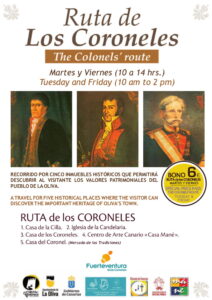
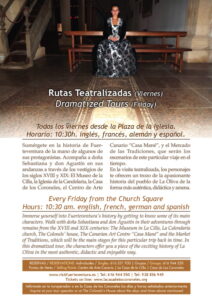
The Colonels of Militias constitute an indispensable element in order to understand what life was like in La Oliva during the XVIII and XIX century, due to their important military, judicial, political and economic power that allowed them become true territorial lords.
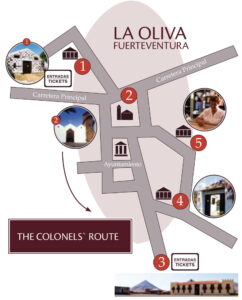
The town of La Oliva hosts a very significant number of buildings, both public and private, that form a dispersed settlement unit and are representative of its historic evolution. Traces of which can be found in the following five buildings:
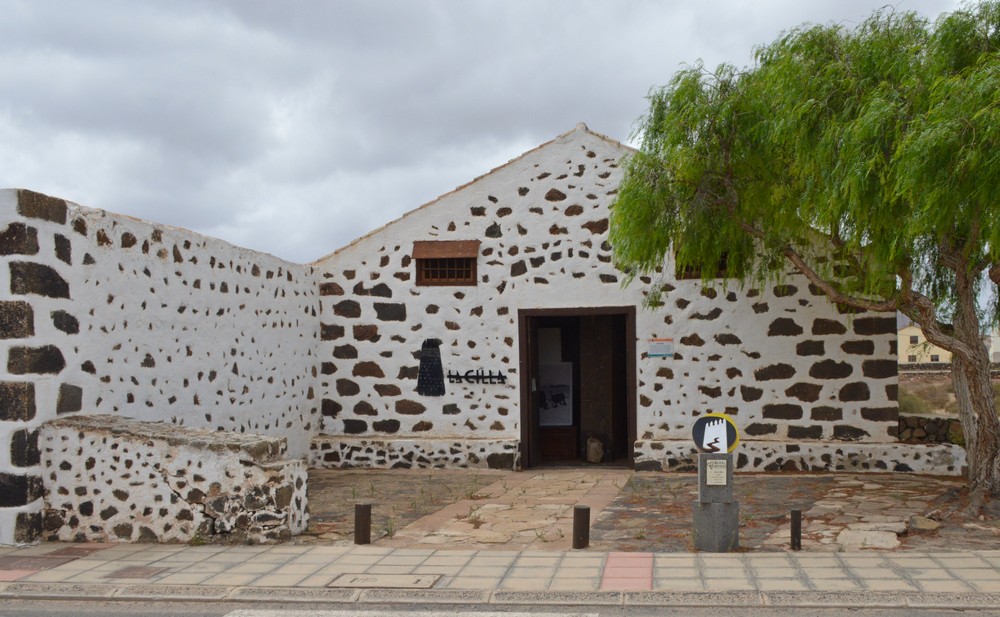 Originally, this building was a warehouse used to store the tithes (the tenth part of the yearly harvest given to the church by the farmers). Nowadays, it houses the Museo del Grano (Museum of the grain), which aims to recover the traditional and cultural elements related to the island’s agricultural past. The main contributor to La Cilla (tithe barn) was the Colonel of Fuerteventura, who owned large tracts of land.
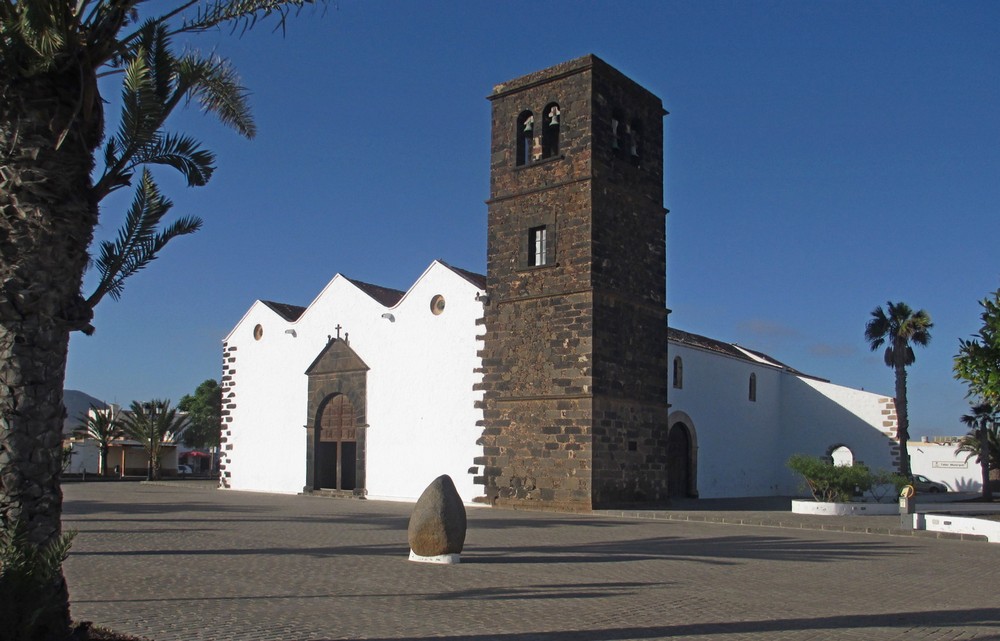 This Mudejar construction was built in the end of the XVI century and presents the peculiar shapes of the local architecture. This building has a rectangular floor with a small annexed sacristy on the right-hand side. It has three naves with chapels and a gable roof. Inside, it houses an interesting collection of items of artistic value, among them is the polyptych of the Retablo Mayor, painted by the renowned baroque artist of the Canaries, Juan de Miranda Cejas (1723-1805). Throughout its extensive historical development as a place of worship , this church has had a direct relation with the Family Cabrera, lineage of the colonels of the island. It is declared as Bien de Interés Cultural (Heritage of Cultural Interest) by a decree of the Canary Islands Goverment, 24th September 1993
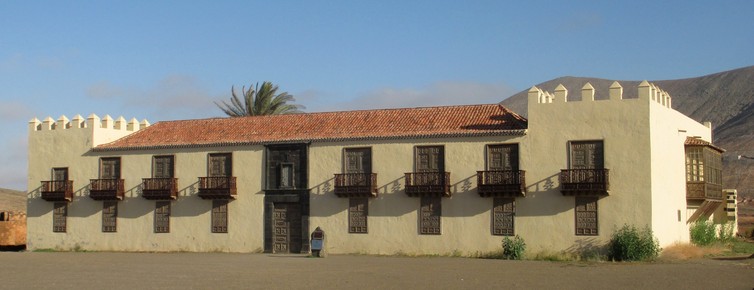 La Casa de Los Coroneles (The house of the Colonels) was built in the second half of the XVII century by the family Cabrera Bethencourt. It was restored and enlarged in the XVIII century in order to become the main residence of the Colonels, who moved from Betancuria to La Oliva. The last restoration undertaken by its owners was in the end of the XIX century. La Casa de los Coroneles is the maximun exponent of the civil architecture of Fuerteventura. The building is declared National Historical and Artistic Monument, by Order of 13th June, 1979. Nowadays, the building is used as a cultural center where exhibitions and cultural activities take place . Of historic interest is the permanent exhibition about the role of the Colonels of militias on the island.
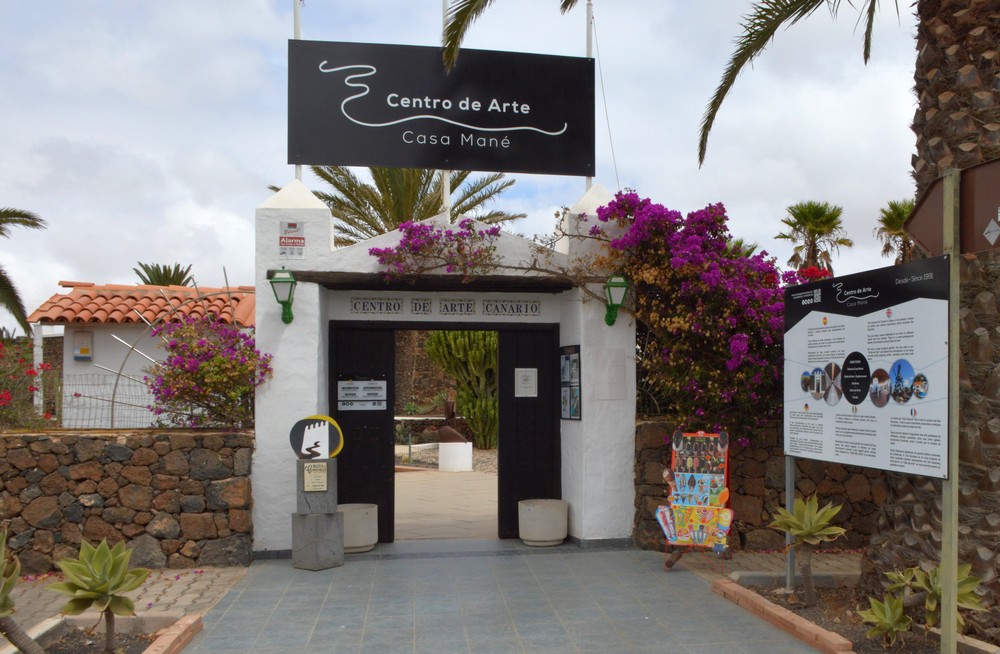 This house has a traditional and plain construction. It was the residence of Blas Curbelo Guerra, Colonel Cristóbal Manrique de Lara and his family’s personal doctor midway through the XIX century. Nowadays, this house and the surrounding buildings house the Centro de Arte Canario «Casa Mané», which is privately owned and hosts one of the most interesting exhibitions of contemporary Canarian artists.
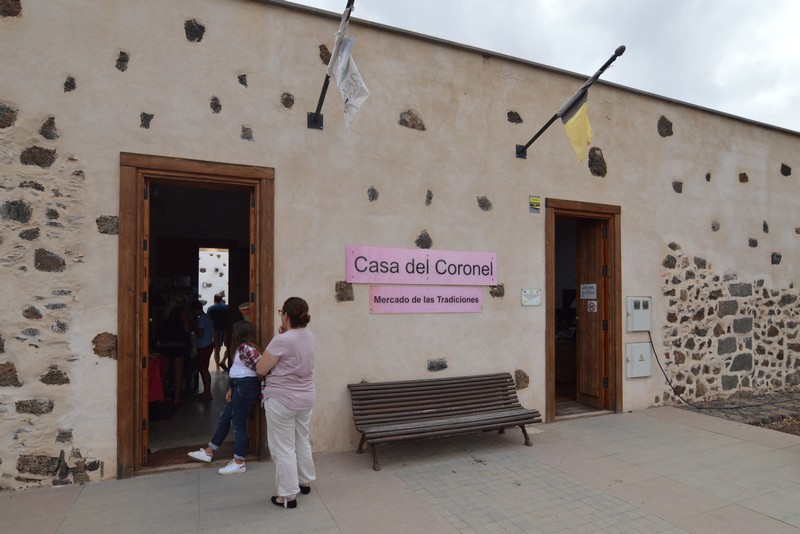 The house was property of the colonels when, in 1840, Sebastiana Cabrera donated it to her son Pedro Manrique de Lara y Cabrera, so he could live independently and in privacy Part of the building has been recently restored by the Ayuntamiento de La Oliva. Located here is the Mercado de Las Tradiciones, where independent farmers trade a varied range of products related to the primary sector and handicrafts of Fuerteventura.


