Welcome back travelers!
Are you curious to know where I’m going to take you today?
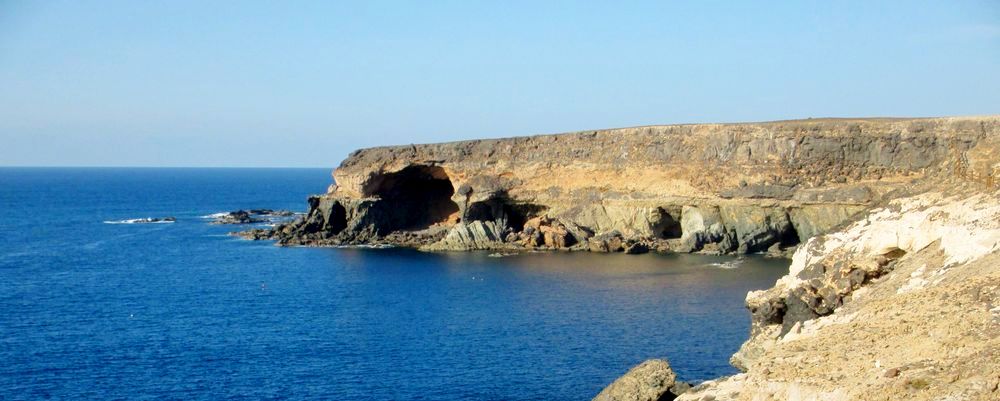
Well, today I am going to take you to discover one of the most extraordinary places on the island of Fuerteventura: the black beach of Ajuy and its fascinating caves, which since December 19, 1994, according to the Law of Natural Areas of the Canary Islands, have been classified as a natural monument. 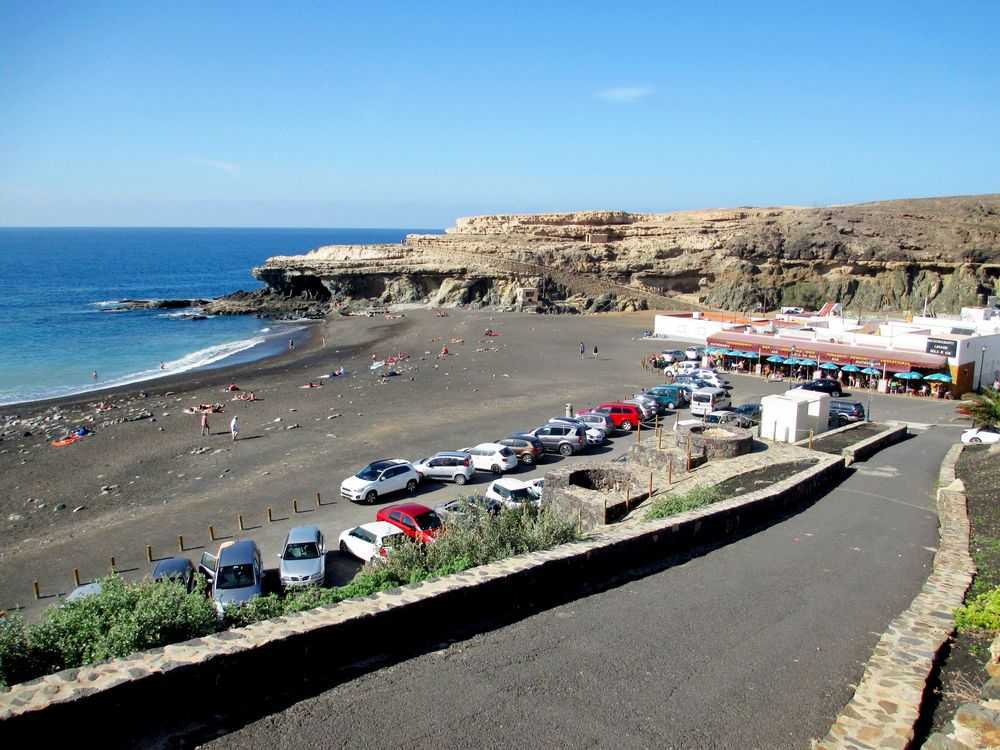 Ajuy is a small fishing village located on the west coast of Fuerteventura and is part of the municipality of Pájara.
Although today this place lives mainly on tourism, originally its economy was essentially based on fishing.
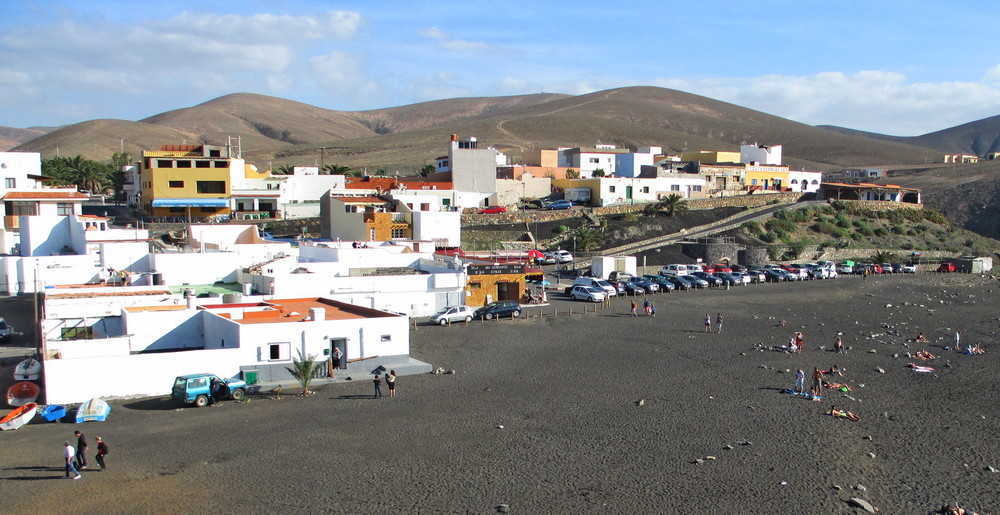 Its caves, ancient lime kilns, black beach, fish restaurants and interesting geology make it a very popular day trip for many tourists today.
The short coastal path leading to the sea caves starts at the northern end of the beach.
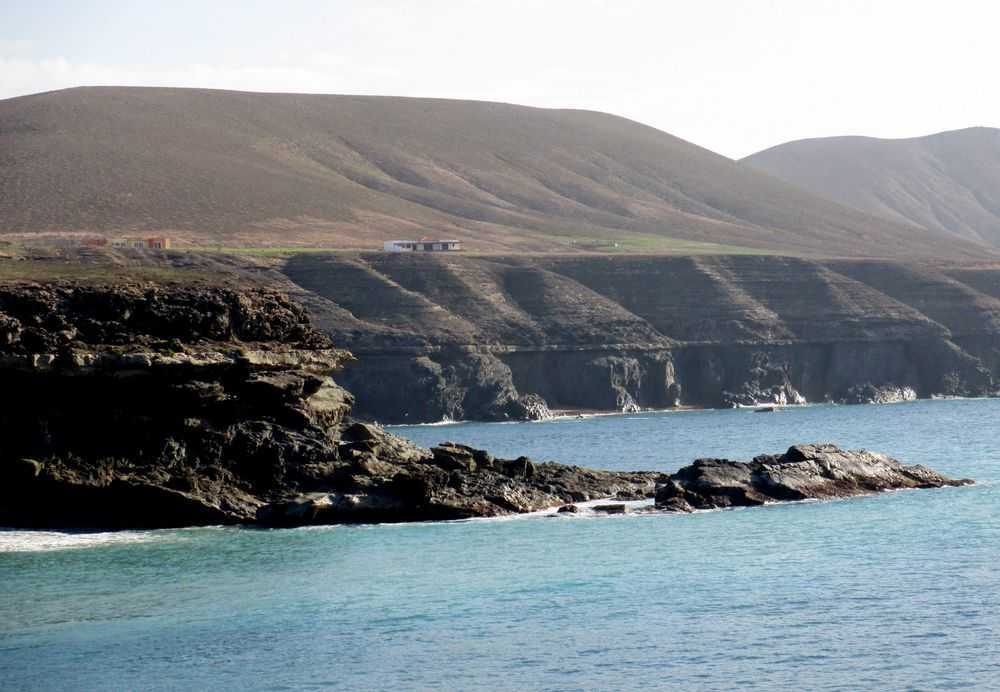
Here you can clearly seethe oldest rocks in all of the Canary Islands, over 100 million years old, formed before the American and African plates separated, along with layers of ancient beaches and river courses that are now dry. 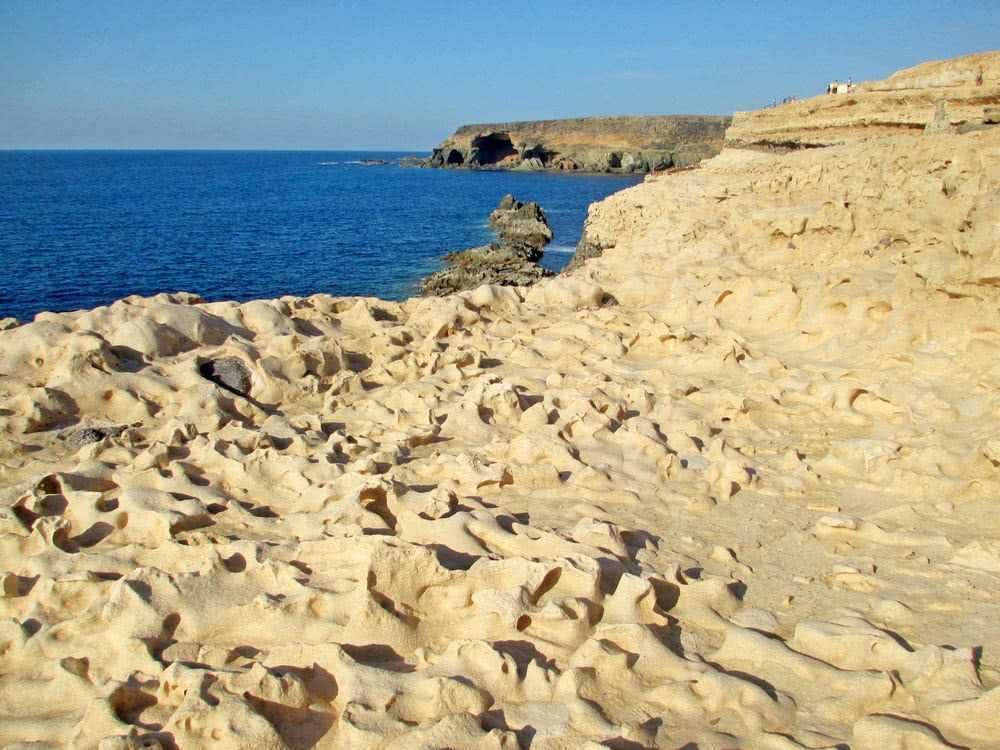 You can also find fossils of marine gastropods and trace the geological formation of Fuerteventura thanks to sediments and rock formations.
Before starting the tour, I recommend that you stop and read the useful information board located right at the beginning of the street, where you will find a lot of interesting information about the place.
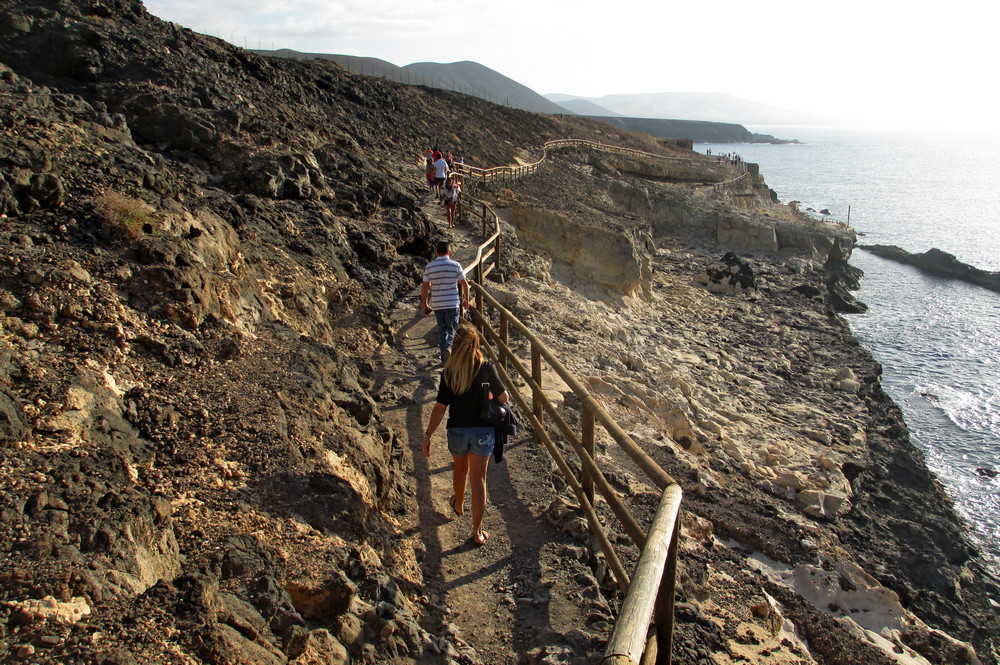 So are you ready to start our walk?
Do you wear comfortable shoes?
Did you remember to bring a good camera?
Well then let’s go!
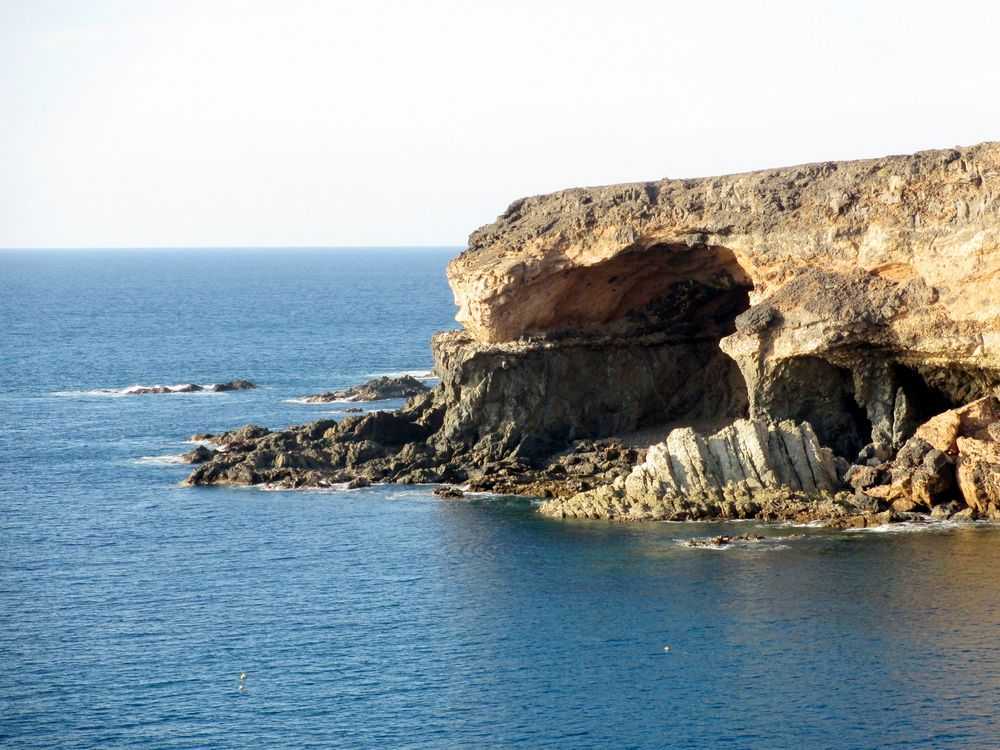 To get to the caves it takes about 20 minutes; time in which you will enjoy a truly evocative view and panorama!
You will be able to observe all the beauty and immensity of the horizon, the thousand colors of the Ocean and I am sure you will not be able to resist taking some photos! 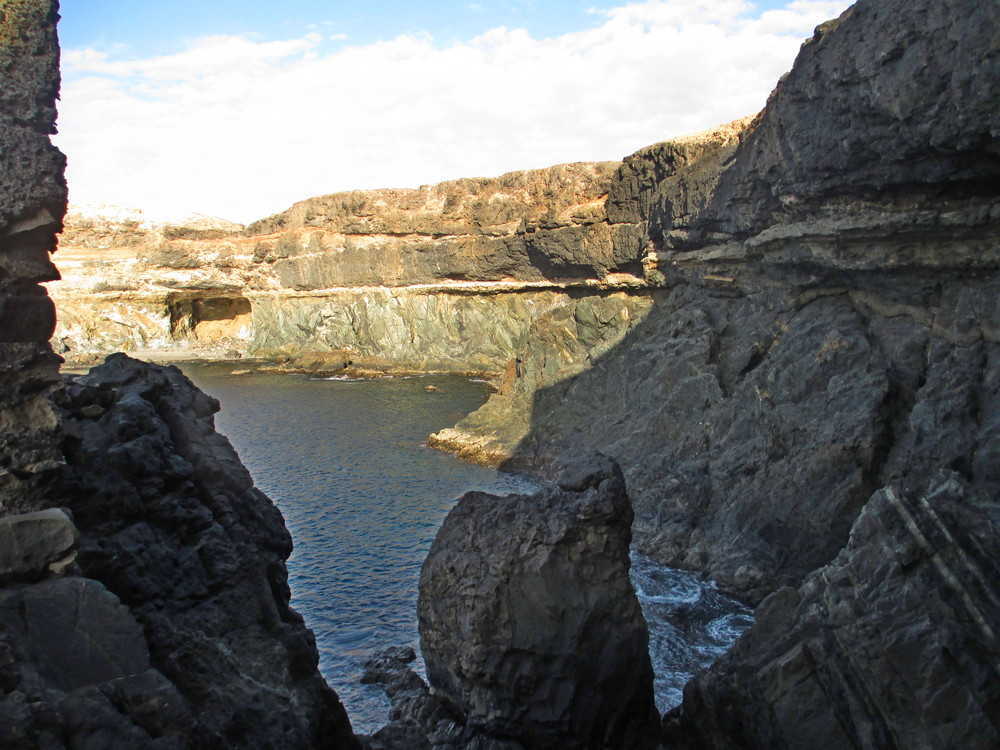 Once you arrive at the caves, if the ocean allows it, that is, if the waters are not too turbulent to prevent access, I recommend that you visit the interior as if you were a little explorer, because the atmosphere is truly “magical”.
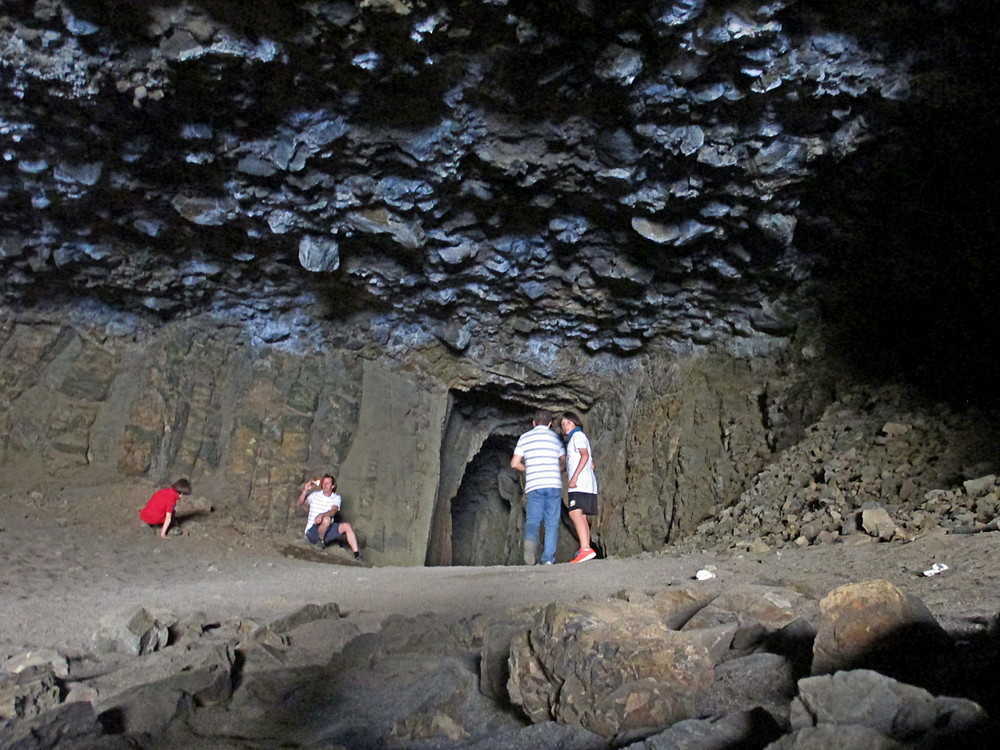 Legend has it that the pirates who once plundered the islands used these caves as a refuge to hide their loot.
From a historical point of view, it was in this part of the island that Jean de Bethencourt, together with twenty-three Normans, landed in 1402 to begin the conquest of Fuerteventura. For several centuries, the port of Ajuy was one of the most important ports in the Canary Islands. 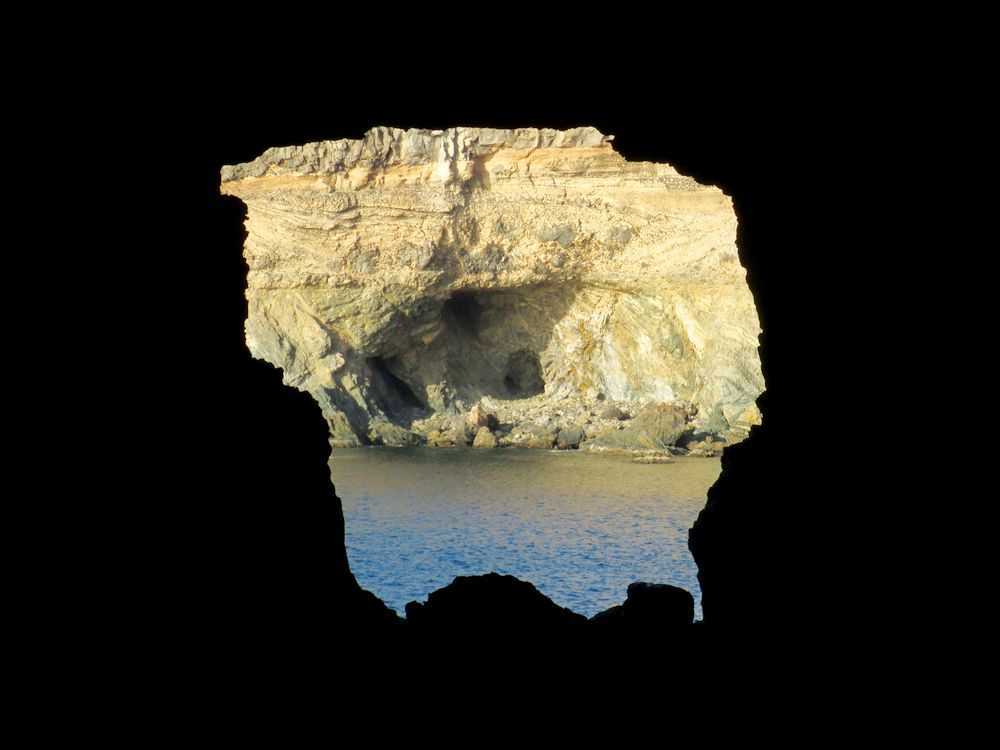 As I told you initially, Ajuy, in addition to its caves, is also famous for its suggestive black beach that contrasts perfectly with the turquoise of its waters.
This beach is also known as Puerto de la Peña, since in earlier historical moments it served as a place for the shipment of cereals and livestock from the island of Fuerteventura to the internal market or, even, to Lower Andalusia and the island of Madeira.
Similarly, locals often call it the “beach of the dead” because of the strong sea currents that characterize this stretch of coast and have caused the death of many people in the past.
For this reason , bathing is not recommended here. 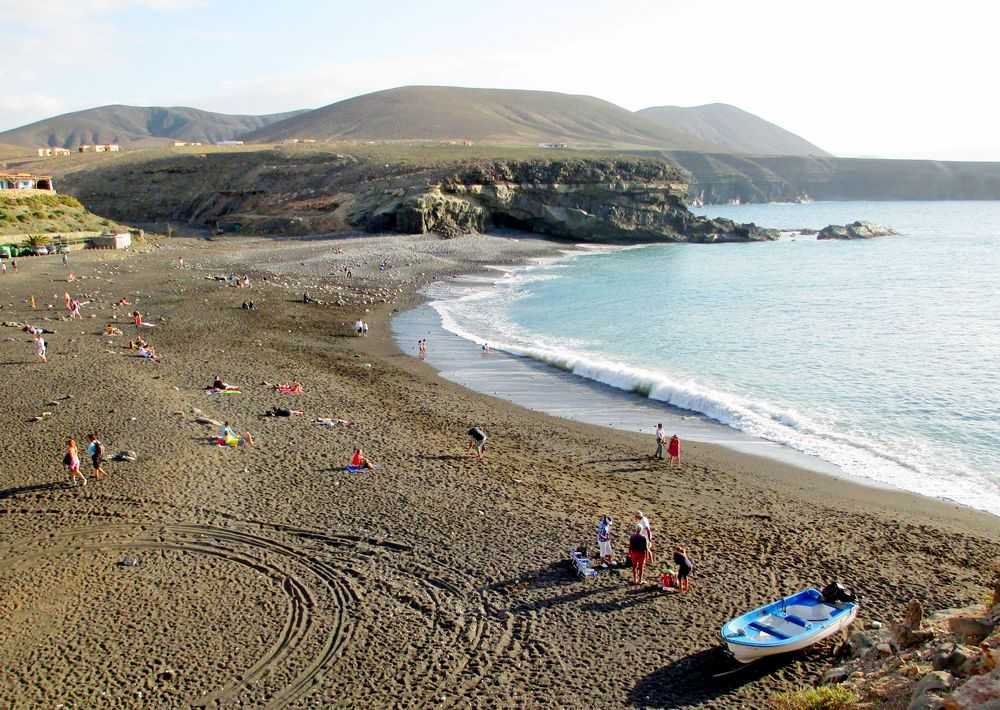 But don’t worry, relaxing on this wonderful black sand beach, surrounded by this spectacular and unusual landscape, will be an experience you will remember for a lifetime. Information not to be overlooked: the visit to the Ajuy Caves is completely free.
A few years ago there were attempts by residents to charge an “entrance fee” to allow access to the caves but in the end it was decided to leave access free.
 Well travelers, that’s all for now.
I hope you enjoyed our little virtual excursion.
See you soon with a next trip to discover the wonderful island of Fuerteventura! by: Manola Mancuso photo by: Maurizio Bertuccelli